


My baby is yellow / jaundice
Jaundice is very common and affects about 6 out of 10 babies. It makes the skin and eyes look yellow. It happens more often in babies born before 37 weeks. Jaundice usually starts 2 to 3 days after birth and goes away by two weeks of age. Most of the time, it is not harmful.
Your newborn should be checked for jaundice at every opportunity, especially in the first 72 hours. This involves looking at your baby in bright light (natural light if possible) to see if they look yellow.
If your baby seems to have jaundice, your midwife should check the bilirubin level at their next routine check. If jaundice appears within the first 24 hours of life, your baby should be checked the same day—contact your midwife right away.
When should you worry?
If your child has any of the following:
-
Breathing very fast, too breathless to talk, eat or drink
-
Working hard to breathe, drawing in of the muscles below the ribs, or noisy breathing (grunting)
-
Breathing that stops or pauses
-
Is pale, blue, mottled or feels unusually cold to touch
-
Difficult to wake up or very sleepy
-
Weak, high-pitched cry or can’t be settled
-
Has a fit (seizure)
-
Has a rash that does not disappear with pressure (the ‘Glass Test’)
-
Has a temperature more than 38°C or under 36°C (unless fever in the 48 hours following vaccinations and no other red or amber features
You need urgent help
Go to the nearest Hospital Emergency (A&E) Department or phone 999
If your child has any of the following:
-
Jaundice appears in the first 24 hours of life
-
Rapid progression in the intensity of 'yellowness'
-
Pale stool - keep a sample to show the doctor
-
Still jaundiced at 2 weeks of life
-
Breathing a bit faster than normal or working a bit harder to breathe
-
Dry skin, lips or tongue
-
Not had a wee or wet nappy in last 8 hours
-
Poor feeding (less than half of their usual amount)
-
Irritable (Unable to settle them with cuddles, toys or feeding)
-
Getting worse and I am still worried
You need to contact a doctor or midwife today
Please ring your GP surgery or call NHS 111 - dial 111
If symptoms persist for 4 hours or more and you have not been able to speak to either a member of staff from your GP practice or to NHS 111 staff, recheck that your child has not developed any red features.
Your baby has had their jaundice recently assessed by a health professional AND
-
Continues to feed well, breast or formula. Has plenty of wet nappies and continues to pass green poo on day 2-3 changing to yellow "seedy" by day 5. Breast fed babies poo can appear "seedy" which are fat deposits within their poo and are a reassuring sign your baby is being well fed.
-
Baby wakes up/cries regularly for feeds.
Additional information is available about infant crying and how to cope – click here.
Self care
Continue providing your child’s care at home. If you are still concerned about your baby, speak to your health visitor, local pharmacist or call NHS 111– dial 111
This content has been developed by healthcare professionals from across the UK in collaboration with the RCPCH.
Why do babies get jaundice?
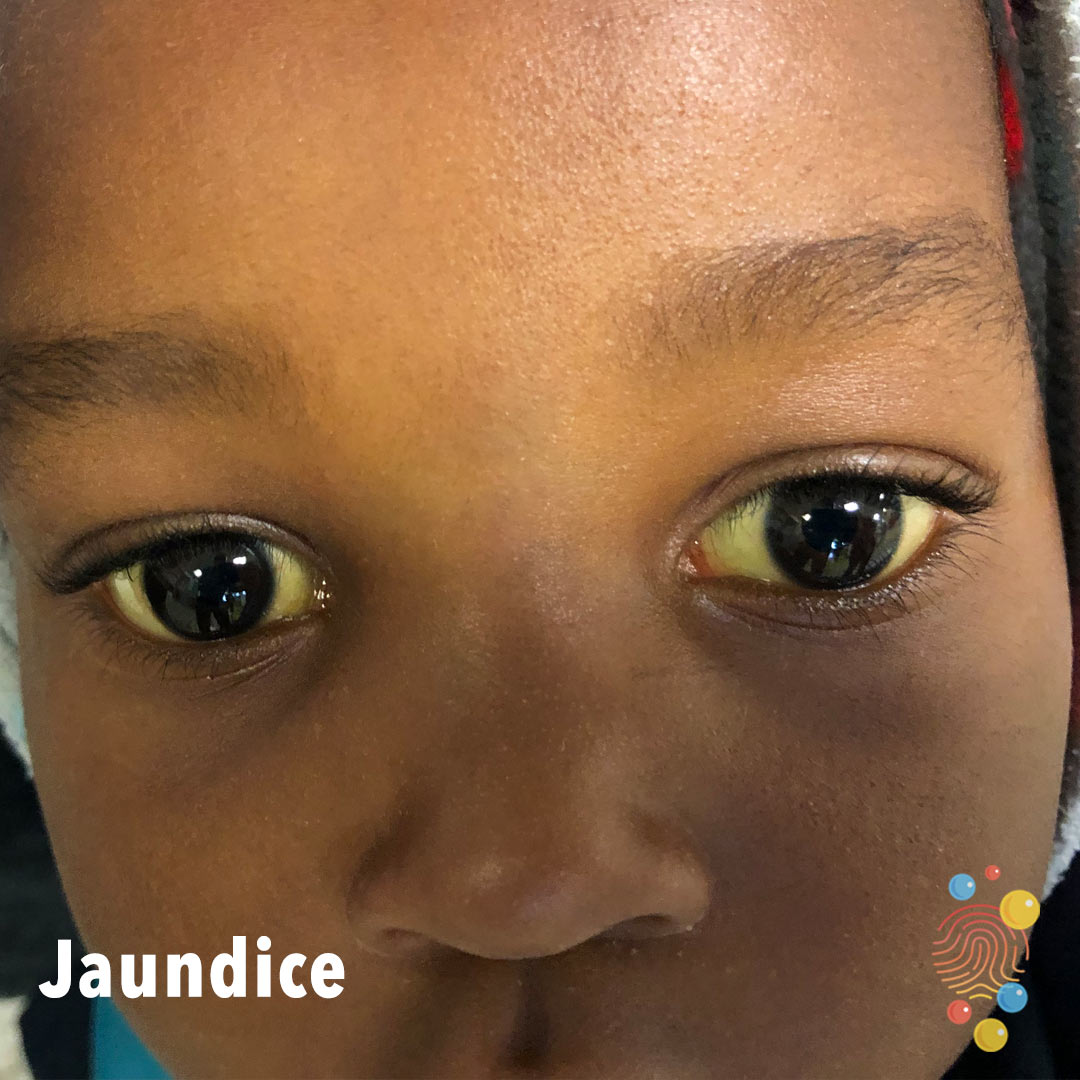
It’s completely normal for babies to have mild jaundice. This happens because babies are born with a lot of red blood cells, and when these cells break down after birth, they produce a yellow pigment called bilirubin. Normally, the liver removes bilirubin, but since a baby’s liver is still developing, it can take up to two weeks for the bilirubin to clear. Breastfeeding can also cause mild jaundice, but the benefits of breastfeeding far outweigh this minor issue.
In a small number of cases, there could be a more serious reason for severe jaundice. This might include blood group differences between the mother and baby, higher than normal levels of red cells in the baby (called polycythaemia), or genetic problems with red cells. If there’s a family history of red cell problems, let your midwife know during pregnancy so your baby can be checked with special tests after birth.
Sometimes, jaundice lasts longer than two weeks. If this happens, your baby might need to go to the hospital for further blood tests to find out why. Most of the time, this prolonged jaundice is just because your baby’s liver is taking a bit longer to adjust (called physiological jaundice) or it’s due to breast milk jaundice. Neither of these is harmful to your baby.
How will my baby get checked for jaundice?
All newborn babies get a full head to toe examination within 72 hours of being born. In some instances, jaundice is picked up during this examination. If your baby develops jaundice at home, in most situations, they will not need to see a healthcare professional unless they have any red or amber features (see above). If your baby falls within 'Amber', see a GP or Community Midwife urgently as a blood test may be needed to check their jaundice 'level'. If your baby has any 'Red' features, they will need to be immediately assessed in hospital - dial 999 and ask for assistance from the emergency services.
For more information about testing for jaundice, click here.
Feeding your baby during jaundice:
Continue to feed your baby as normal. If you are breastfeeding your baby, continue to breast feed regularly and wake your baby up for feeds if necessary. Sometimes, your midwife or doctor might suggest formula supplementation for a short period to help.
Treatment of neonatal jaundice:
In most babies, jaundice doesn’t need treatment and should go away on its own by two weeks of age. Treatment is only needed if the jaundice level is high and likely to rise without help. A healthcare professional will decide if treatment is necessary after checking the baby's jaundice level with either a blood test or a hand-held device. If the level is high, it must be confirmed with a blood test.
The most common treatment for jaundice is phototherapy. This involves keeping the baby under special lights. The light changes the bilirubin in the skin so that the liver can process it more easily. You can click here for a video on phototherapy.
Complications
In a vast majority of babies, jaundice does not lead to any long-term complications. However, in less than 1 in 100,000 babies, extremely high levels of jaundice may affect the baby's brain leading to a condition called kernicterus.
Health visitors are nurses or midwives who are passionate about promoting healthy lifestyles and preventing illness through the delivery of the Healthy Child Programme. They work with you through your pregnancy up until your child is ready to start school.
Health Visitors can also make referrals for you to other health professionals for example hearing or vision concerns or to the Community Paediatricians or to the child and adolescent mental health services.
Contact them by phoning your Health Visitor Team or local Children’s Centre.
Sound advice
Health visitors also provide advice, support and guidance in caring for your child, including:
- Breastfeeding, weaning and healthy eating
- Exercise, hygiene and safety
- Your child’s growth and development
- Emotional health and wellbeing, including postnatal depression
- Safety in the home
- Stopping smoking
- Contraception and sexual health
- Sleep and behaviour management (including temper tantrums!)
- Toilet training
- Minor illnesses
For more information watch the video: What does a health visitor do?
Midwives provide advice, care and support for women and their babies during pregnancy, labour and the early postnatal period. They provide health education and parenting advice until care is transferred to a health visitor. This usually happens when your baby is about 2 weeks old.
Sound Advice
A midwife is an expert in normal pregnancy and birth.
You can find out more information about your local midwifery team by clicking here.
If you’re not sure which NHS service you need, call 111. An adviser will ask you questions to assess your symptoms and then give you the advice you need, or direct you straightaway to the best service for you in your area.
Sound advice
Use NHS 111 if you are unsure what to do next, have any questions about a condition or treatment or require information about local health services.
For information on common childhood illnesses go to What is wrong with my child?
A&E departments provide vital care for life-threatening emergencies, such as loss of consciousness, suspected heart attacks, breathing difficulties, or severe bleeding that cannot be stopped. If you’re not sure it’s an emergency, call 111 for advice.